



KOTA KINABALU: Resolving Native Customary Rights (NCR) land claims in Sabah requires continuous cooperation between the Federal Government and the Sabah Government, with land administration remaining under the jurisdiction of the state government.
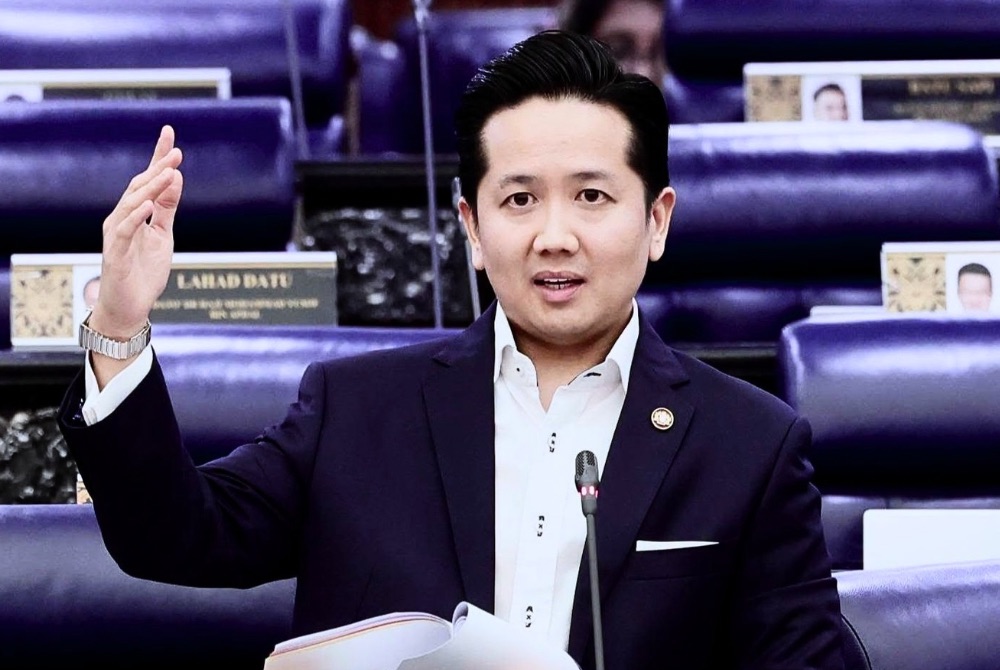
This was clarified by Natural Resources and Environmental Sustainability Minister Datuk Seri Arthur Joseph Kurup in response to a question from the Tuaran Member of Parliament on measures to expedite the resolution of Native Customary Land applications in Sabah.
The question touched on efforts to strengthen the Sabah Native Land Services Programme (PANTAS), including the use of digital technology, speeding up the issuance of land titles to eligible applicants and retaining the annual allocation of RM75 million to safeguard the land ownership rights of native communities.
However, the NRES response explained that land administration matters in Sabah, including the recognition and settlement of NCR claims, cadastral surveys and the issuance of land titles, fall under the jurisdiction of the Sabah Government through the Sabah Lands and Surveys Department (JTU).
Arthur said these responsibilities were carried out in accordance with the provisions of the Sabah Land Ordinance (Cap. 68).
The clarification places the Sabah Government as the primary authority in land administration, demonstrating that the resolution of NCR claims must be carried out within the state’s existing legal framework.
Accordingly, efforts to expedite the settlement of NCR claims and the issuance of land titles require continuous cooperation and coordination between the Federal Government and the Sabah Government.
Although land administration falls under the state’s jurisdiction, the Federal Government continues to play a role in supporting policy coordination and technical matters through relevant agencies.
Among the agencies mentioned were the Federal Department of Director General of Lands and Mines Sabah (JKPTG Sabah) and the Department of Survey and Mapping Malaysia (JUPEM).
The involvement of both agencies forms part of the Federal Government’s support in ensuring that policy and technical matters are coordinated with Sabah’s land administration requirements.
At the same time, the Federal Government, through the Prime Minister’s Department (JPM), particularly the Sabah and Sarawak Affairs Division and the Implementation Coordination Unit (ICU, JPM), is responsible for coordinating Federal allocations for the implementation of PANTAS in Sabah.
This role demonstrates that Federal support is not limited to policy coordination and technical assistance, but also includes the coordination of allocations to facilitate the implementation of the programme.
In this context, PANTAS is among the mechanisms highlighted in efforts to address applications involving Native Customary Land claims. However, its implementation must take into account the division of responsibilities between the state and Federal governments, as outlined by NRES.
The issue is significant because NCR claims involve more than applications for land ownership documents. They also cover the process of recognising customary claims, conducting cadastral surveys and completing administrative procedures before land titles can be issued.
Each of these components is closely linked to the jurisdiction of JTU as the state department responsible for land matters. Therefore, coordination with Federal agencies must support the process without changing the allocation of administrative powers provided under state law.
The Tuaran MP’s question also focused on the use of digital technology as one of the proposed approaches to strengthen PANTAS. The proposal was raised in the context of expediting application processes and resolving outstanding claims.
However, the NRES response did not specifically outline the type of digital system to be introduced, the agency responsible for developing it or the implementation timeline.
Similarly, no specific timeframe for resolving applications or issuing land titles to eligible applicants was provided in the response.
This means the proposal to introduce digital technology and the call to expedite the process must be distinguished from any implementation decision that has been officially announced.
The same applies to the request to retain the annual RM75 million allocation. Although the amount was raised in the question as a measure to ensure the continuity of PANTAS and protect the land rights of native communities, the NRES response did not specifically confirm that the allocation would be maintained at that level every year.
Instead, the minister explained that Federal allocations for the implementation of PANTAS in Sabah are coordinated through the Sabah and Sarawak Affairs Division and ICU under the Prime Minister’s Department.
This distinction is important to ensure that a request raised by an MP is not mistaken for a financial commitment that has already been approved by the government. Clarification on the agency responsible for coordinating allocations does not, by itself, confirm the amount or continuity of annual funding.
In matters concerning the land rights of native communities, clarity over jurisdiction and coordination channels is essential to ensuring an orderly implementation process. Applicants need to understand that the recognition of NCR claims, cadastral surveys and the issuance of land titles are handled by the state government through JTU, while Federal agencies provide support in policy, technical and allocation matters.
This division of responsibilities also highlights the need for clear communication between agencies to ensure that processes involving several levels of administration are properly coordinated. Continued cooperation can help ensure that Federal technical support and allocations are aligned with implementation needs at the state level.
At the same time, any effort to accelerate the process must remain subject to the Sabah Land Ordinance (Cap. 68), as stated in the NRES response. This is to ensure that administrative matters and the issuance of land titles are carried out in accordance with the prevailing legal provisions.
The NRES response did not specify the number of outstanding applications, the number of land titles already issued or the current progress rate of PANTAS. Therefore, no figures or achievement targets should be assumed to form part of the minister’s response.
Nevertheless, the answer outlines the division of responsibilities that forms the basis of efforts to resolve NCR claims in Sabah. The state government remains the primary authority in land administration, while the Federal Government provides assistance through policy coordination, technical support and allocation management.
Ultimately, the effectiveness of efforts to expedite the settlement of Native Customary Land claims will depend on consistent coordination between both levels of government, alongside the implementation of procedures in accordance with existing laws.
Overall, NRES’s position reflects the need for a joint approach to resolving Native Customary Land claims in Sabah, with the state government retaining primary authority over land administration.
The Federal Government, meanwhile, plays a role in policy coordination, technical support and allocation management for the implementation of PANTAS. Cooperation between both levels of government remains essential to ensuring that NCR claims are resolved and land titles issued to eligible applicants in accordance with existing legal provisions.
