



KOTA KINABALU: Floods, droughts, coastal erosion and disruptions to water supply are among the challenges demanding greater attention in Sabah as climate change places increasing pressure on communities and the state’s economic development.
For people living near rivers and coastal areas, changing weather patterns are more than a natural phenomenon. They can affect the safety of homes, the continuity of livelihoods and access to essential daily supplies.
The situation highlights the need for Sabah to strengthen its preparedness for climate change through long-term planning, resilient infrastructure and adequate financing.
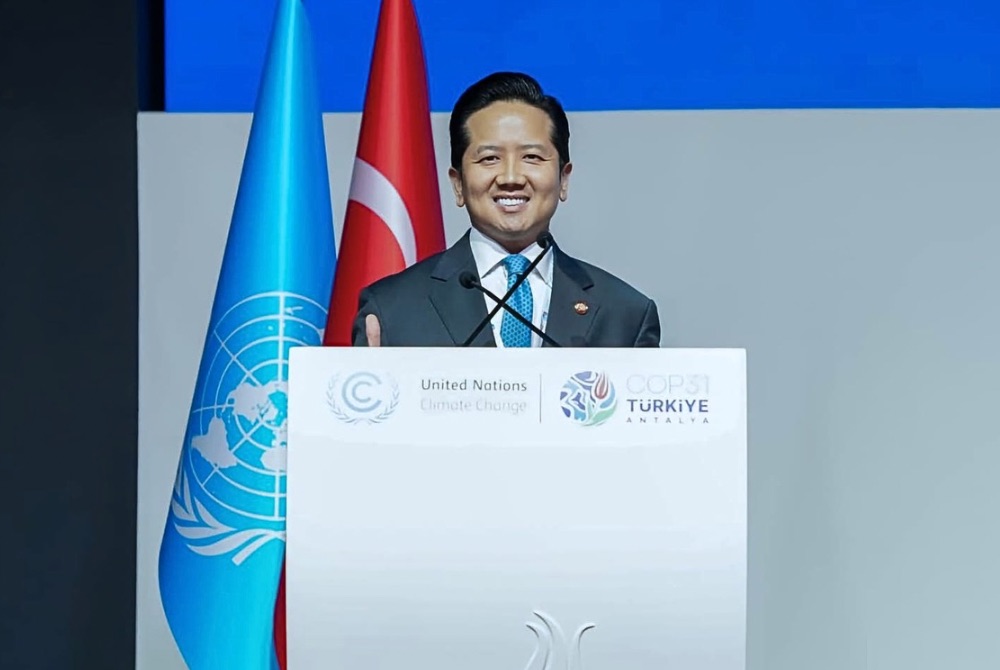
In this regard, the launch of the Securities Commission Malaysia’s Sukuk PRISMA framework at the 31st Conference of the Parties to the United Nations Framework Convention on Climate Change (UNFCCC COP31) in Antalya, Türkiye, has opened up a new financing avenue to support the country’s climate adaptation agenda.
Natural Resources and Environmental Sustainability Minister Datuk Seri Arthur Joseph Kurup said the initiative was important in channeling capital towards climate adaptation efforts and strengthening the country’s resilience.
He said climate change was already having a significant impact on Malaysia, making adaptation an important investment to safeguard economic resilience.
Arthur also said the ministry was developing Malaysia’s first National Adaptation Plan (MyNAP) to strengthen the country’s planning in addressing climate-related risks.
For Sabah, both initiatives could support development that takes environmental risks into account, particularly in areas vulnerable to floods, droughts and rising sea levels.
Sabah has a vast geographical area, with communities spread across urban centres, the interior, river valleys and coastal settlements. This requires different adaptation approaches based on local terrain, environmental conditions and community needs.
In urban areas such as Kota Kinabalu, drainage management, flood mitigation and the protection of coastal areas should be among the priorities in development planning.
Meanwhile, rural communities that depend on rivers and natural water sources need a more reliable water supply, particularly during prolonged dry spells.
The development of MyNAP is therefore important to ensure the country’s adaptation measures follow a more structured direction and take account of the different risks faced by individual regions.
For Sabah, the plan could give attention to protecting water catchment areas, developing drainage infrastructure, restoring coastal ecosystems and strengthening early warning systems for disasters.
However, sound planning must be backed by sufficient financial resources to ensure that identified projects can be implemented rather than remain proposals on paper.
This is where Sukuk PRISMA, a Shariah-compliant financing instrument introduced by the Securities Commission Malaysia, could play a role.
The framework is aligned with international Shariah standards and the ASEAN Taxonomy, providing viable climate adaptation projects with opportunities to access domestic and international capital.
For a state such as Sabah, the instrument could create opportunities for projects that prioritise environmental protection and community well-being.
However, this does not mean that every project will automatically receive financing. Proposals must meet the framework’s criteria, have clear plans and demonstrate climate adaptation benefits. Careful assessment is also necessary to ensure that funds are used responsibly, high-risk projects are avoided and the needs of vulnerable communities are prioritised, with transparency at every stage of implementation.
Areas that could receive attention include mangrove rehabilitation, coastal protection, water resource management, more effective drainage systems and infrastructure capable of withstanding extreme weather.
In agriculture, changing rainfall patterns and longer dry periods can affect crop production. This calls for investment in irrigation systems, agricultural technology and more efficient water resource management.
Strengthening infrastructure resilience must also be a priority, as roads, bridges and public facilities are vital links for communities in the interior.
Floods that cut off roads do not merely disrupt residents’ movement. They can also affect food deliveries, access to healthcare services and economic activities.
Infrastructure construction and maintenance must therefore take climate risks into account to reduce damage and recovery costs in the future.
The public-private collaboration promoted through Sukuk PRISMA could also encourage wider participation in the climate adaptation agenda.
Arthur said the framework would expand opportunities for collaboration between the public and private sectors, helping Malaysia move from planning to the implementation of actual projects.
The private sector can contribute through investment, technical expertise, innovation and the development of solutions that meet local needs.
For Sabah, this approach could encourage investment in green technology, water management, environmental conservation and sustainable infrastructure.
Economic development must also be balanced with the conservation of natural resources to ensure that progress does not increase vulnerability to future disasters.
This is particularly important for Sabah, where its natural beauty, biodiversity and coastal areas are among the key assets supporting the tourism sector.
Climate adaptation should therefore be regarded as part of the state’s economic development strategy, rather than the responsibility of environmental agencies alone.
Ultimately, the effectiveness of Sukuk PRISMA and MyNAP should be measured by the outcomes experienced by communities, not merely by the amount of financing raised or the policies introduced.
Residents need better protection for their homes, secure water supplies, more resilient agricultural areas and infrastructure that can continue functioning during extreme weather.
For Sabah, investment in climate adaptation is not simply preparation for future threats. It is necessary to ensure that the state’s development is not disrupted by increasingly complex environmental risks.
The effort is also in line with Malaysia’s aspiration to achieve net-zero greenhouse gas emissions by 2050.
The financing opportunities offered through Sukuk PRISMA should therefore be utilised strategically, while MyNAP should serve as a guide to ensure that investments address the actual needs of the country and its states.
It is hoped that efforts advanced at the international level through COP31 can be translated into action on the ground, so that Sabah’s communities can not only benefit from development but also become better prepared for climate change.
Ultimately, the true measure of success in the sustainability agenda is not merely the commitments announced on the world stage, but how effectively people’s lives are protected from the threats posed by climate change.
