



ANTALYA: Sabah’s tropical rainforests, rivers that sustain rural communities, coastal areas and diverse wildlife make the state one of Malaysia’s most valuable natural assets.
However, this wealth of natural resources also places Sabah in a position of significant responsibility as it confronts climate change, which increasingly threatens ecological balance and people’s livelihoods.
From floods and droughts to rising temperatures and coastal erosion, the effects of climate change can no longer be treated lightly. They have the potential to affect incomes, food security and community well-being.
Against this backdrop, Malaysia’s voice at the 31st Conference of the Parties to the United Nations Framework Convention on Climate Change (UNFCCC COP31) in Antalya, Türkiye, carries particular significance for states such as Sabah.
Protecting natural heritage cannot depend solely on the financial capacity of state governments or developing countries. It requires fairer international support through climate financing, technology and cooperation.
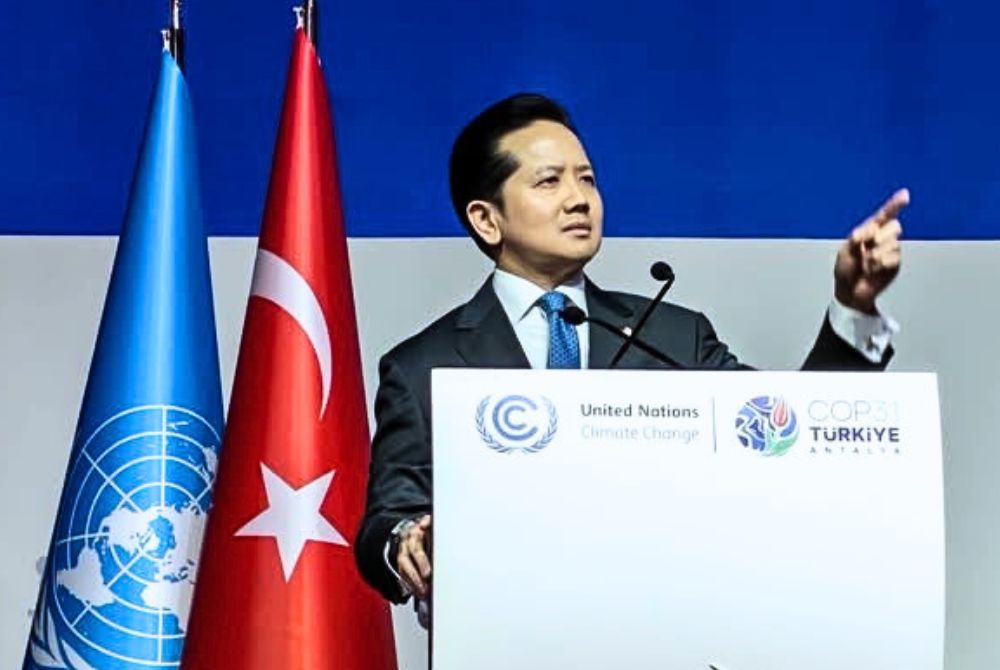
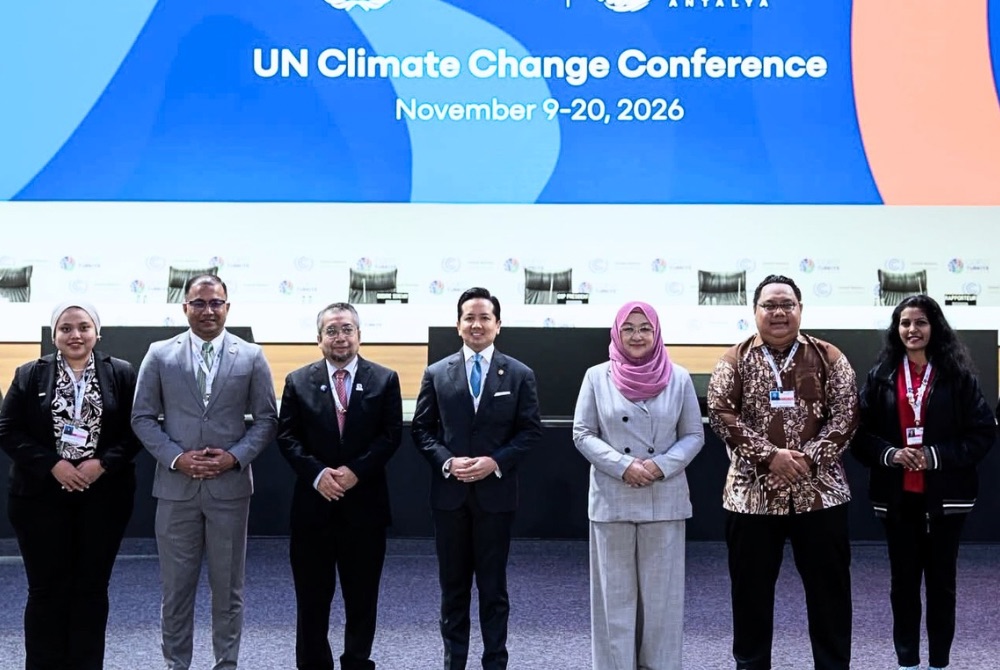
Natural Resources and Environmental Sustainability Minister Datuk Seri Arthur Joseph Kurup, who led Malaysia’s delegation to the conference, conveyed the country’s firm position that developed nations must honour their climate financing commitments and increase grant-based support for developing countries with rich biodiversity.
The call is particularly relevant to Sabah, which is home to tropical forests, marine ecosystems and valuable wildlife habitats, including conservation areas that are important national assets.
For Sabah, forest conservation is not simply about protecting trees and wildlife habitats. It is closely linked to water security, climate stability and the livelihoods of communities that depend on natural resources.
Water catchment areas and forest reserves, for instance, play an important role in ensuring a continued supply of raw water for domestic use, agriculture and economic activities.

At the same time, mangrove ecosystems along the coast provide natural protection against waves, coastal erosion and changes in the marine environment.
If these ecosystems deteriorate, the impact will be felt not only by wildlife but also by fishing communities and residents living near coastal areas.
Malaysia’s call for fairer climate financing should therefore be seen as an effort to ensure that biodiversity-rich states such as Sabah have sufficient resources to pursue conservation while meeting their development needs.
In Malaysia’s national statement during the high-level segment of COP31, Arthur also urged the international community to strengthen multilateralism and advance a more ambitious, balanced and implementation-focused global climate response.
He stressed that climate financing must match the scale of global ambition, while the principle of Common but Differentiated Responsibilities and Respective Capabilities (CBDR-RC) must remain the foundation of collective action.
For Sabah, international financial support could help strengthen forest conservation, mangrove rehabilitation, biodiversity protection and the development of nature-based solutions.
Such support is increasingly important as Sabah also faces risks arising from changing weather patterns and rising temperatures.
The National Climate Change Policy 2.0 states that Sabah and Sarawak are expected to experience higher temperature increases than several other parts of Malaysia, with implications for water and food security, health and biodiversity.
This shows that climate change is not merely an environmental issue, but one directly connected to the state’s economic development.
Changing rainfall patterns, for example, can disrupt agricultural activities, while prolonged dry spells may affect water supplies and increase the risk of forest fires.
Nature-based tourism is also exposed, as forests, mountains, islands and marine areas are among Sabah’s main attractions.
Damage to these ecosystems could extend beyond biodiversity loss and affect economic opportunities for communities that depend on tourism.
Against this backdrop, Malaysia’s participation in D-8 cooperation also offers an important avenue for Sabah to benefit from the international climate agenda.
Malaysia welcomed the proposed D-8 Climate and Environment Roadmap for 2027 to 2030, which focuses on climate adaptation and resilience, clean energy transition, climate financing and biodiversity conservation.
The proposed D-8 Environment and Climate Cooperation Platform is also expected to strengthen South-South cooperation through the sharing of experience, expertise and joint initiatives.
For Sabah, such cooperation could create opportunities to exchange knowledge on forest management, coastal protection, environmental monitoring technologies and low-carbon economic development.
Beyond D-8, Malaysia is also strengthening ties with ASEAN and Japan through the launch of the Interim ASEAN-Japan Input to the Second Global Stocktake report at the Japan Pavilion.

The report provides a platform to assess progress towards regional climate goals in line with the Paris Agreement, while highlighting technology, innovation, investment and trade opportunities.
Technology sharing is particularly important to Sabah, as the state needs solutions suited to its geographical conditions and communities’ requirements.
Forest monitoring technology, early warning systems, water resource management and biodiversity research could help improve the effectiveness of efforts to address climate risks.
Meanwhile, Arthur’s meeting with Fiji’s Minister for Foreign Affairs and Foreign Trade, Sakiasi Raisevu Ditoka, also conveyed Malaysia’s solidarity with developing countries facing climate threats.
The discussions focused on fairer access to climate financing and efforts to address loss and damage, including damage to ecosystems.
Although Fiji’s geographical circumstances differ from Sabah’s, the island nation’s experience in facing climate threats has similarities with challenges that coastal communities in Sabah must consider.
Rising sea levels, coastal erosion and changes to marine ecosystems can affect settlements, livelihoods and the security of coastal communities.
International cooperation also provides a platform to advance the interests of communities most exposed to climate change.
More importantly, the commitments Malaysia brings to COP31 must be translated into tangible benefits at state level.
Sabah needs sustained support to protect its forests, safeguard coastal areas and ensure rural communities are not left behind in the sustainable development agenda.
Ultimately, the success of Malaysia’s climate diplomacy should not be measured solely by the adoption of international frameworks and partnerships, but by how far these efforts help protect natural heritage and people’s lives.
For Sabah, every effort to conserve forests, rivers and coastal areas is an investment in a safer, more sustainable and resilient future for the state.
