



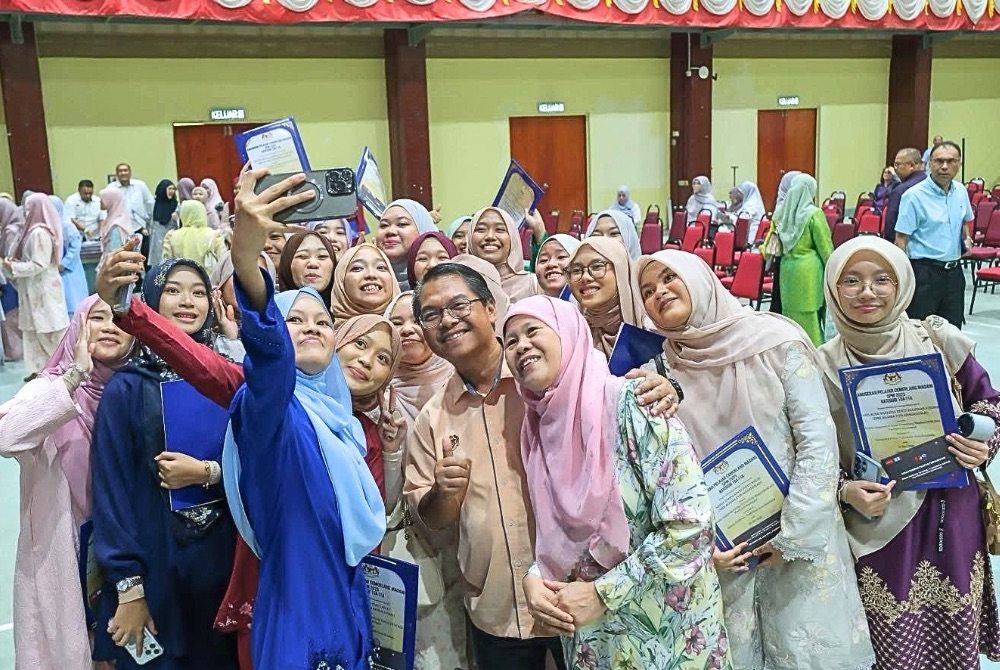
KUALA LUMPUR: Human capital development remains a key government priority, ensuring that Sabah and Sarawak possess a highly skilled workforce capable of spearheading the states’ future development.
Minister in the Prime Minister’s Department (Sabah and Sarawak Affairs), Datuk Ts. Mustapha Sakmud, stated that investment in education should be viewed as a long-term strategy to cultivate a new generation capable of meeting the needs of the nation’s various strategic sectors.
According to him, efforts to strengthen education extend beyond the construction of school infrastructure; they also encompass the provision of scholarships and opportunities for further studies at public and private higher education institutions, as well as Technical and Vocational Education and Training (TVET) institutions.
Furthermore, the government is encouraging more individuals from Sabah and Sarawak to pursue professional fields—such as medicine, engineering, and technology—as well as other critical areas essential for supporting the development of these states.
He emphasized that investment in education is the best possible investment, as its benefits are felt not only by individuals but also contribute positively to the economy and the well-being of society as a whole.
Additionally, the government views the development of local talent as a crucial step toward reducing reliance on external labor, particularly in sectors that demand high-level expertise.
This approach aligns with the development agendas of Sabah and Sarawak, which prioritize the enhancement of human capital capacity as a primary driver of economic growth.
He added that broader educational opportunities will enable more young people to acquire new skills before returning to contribute to the development of their respective states.
Nevertheless, strengthening education requires ongoing collaboration between the Federal Government, state governments, educational institutions, and the industry to ensure that the training provided meets the demands of the job market.
Consequently, the provision of scholarships, educational assistance, and expanded access to TVET are expected to be further bolstered to produce a highly competent and competitive workforce. Consequently, educational development is no longer viewed merely as a social agenda; rather, it serves as a vital foundation for building a knowledge-based economy and ensuring that Sabah and Sarawak possess the human capital capable of driving sustainable development.
