



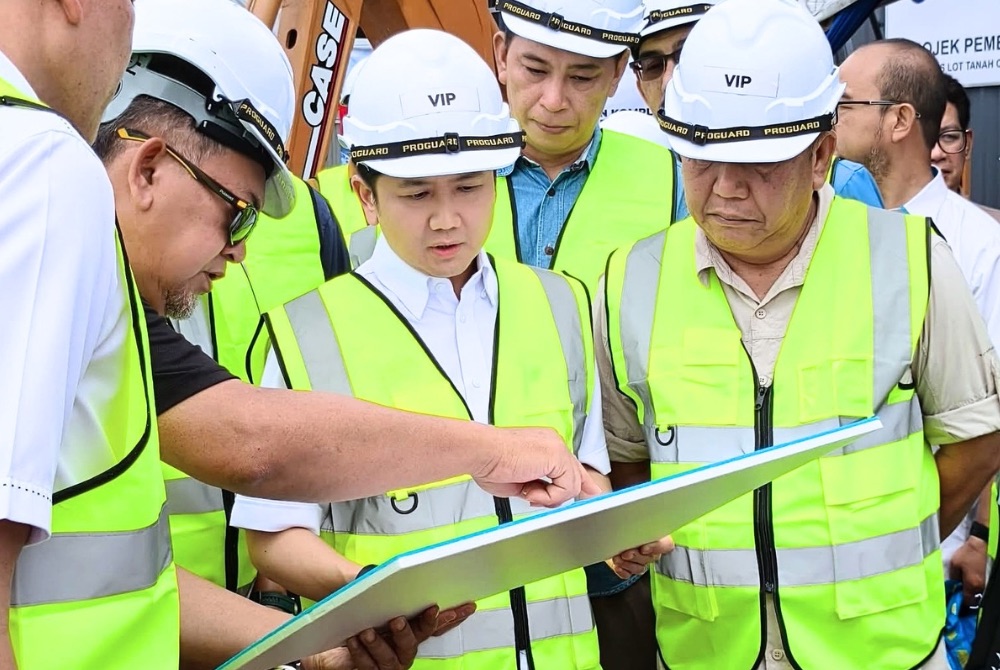
KOTA KINABALU: The construction of the Natural Resources and Environmental Sustainability Ministry’s (NRES) Mini Complex in Kepayan, costing RM80.9 million, is expected to strengthen service delivery, operational coordination and natural resource management in Sabah.
Built on a 6.77-hectare site near Kota Kinabalu International Airport, the complex will bring together several key federal departments under the ministry that are currently operating from separate premises around Kota Kinabalu and Penampang.
The project is expected to be completed in early 2029, providing a more organised working environment for the agencies and reducing their reliance on rented office space.
NRES Minister Datuk Seri Arthur Joseph Kurup said the complex would house the Department of Survey and Mapping Malaysia (JUPEM), the Department of Mineral and Geoscience Malaysia (JMG), the Department of Director General of Lands and Mines (JKPTG), and the Malaysian Meteorological Department (MetMalaysia).
The centralised facility is intended to simplify administration and improve coordination for meetings, training and technical work.
Previously, the departments operated from different locations, with some occupying rented premises in and around Kota Kinabalu. The complex will provide federal agencies with a dedicated base in Sabah.
The complex will include administrative buildings, a multipurpose hall, a JMG laboratory, a warehouse and management offices, with green building features incorporated into its design.
The project’s significance goes beyond office space. In a state with extensive forests, rich biodiversity and important mineral resources, agencies responsible for mapping, land administration, geoscience and weather information support both development planning and environmental management.
JUPEM, for example, provides surveying and mapping data, while JMG supplies technical expertise on minerals and geoscience. JKPTG handles matters relating to land and minerals, and MetMalaysia provides weather information and forecasts.
Bringing the departments together could create more opportunities for collaboration, particularly when projects require the sharing of technical information and expertise.
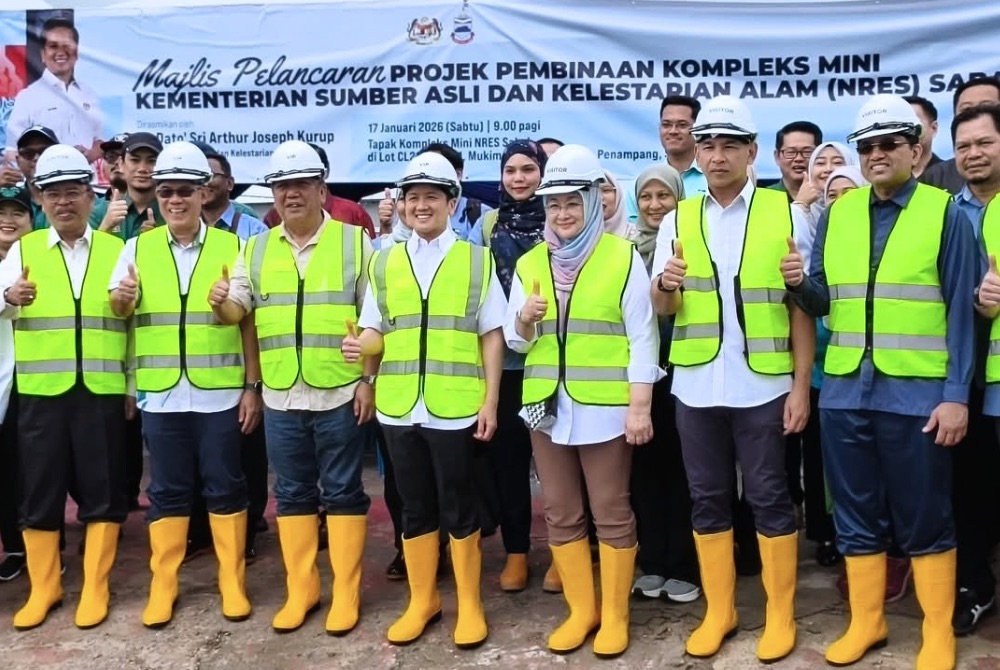
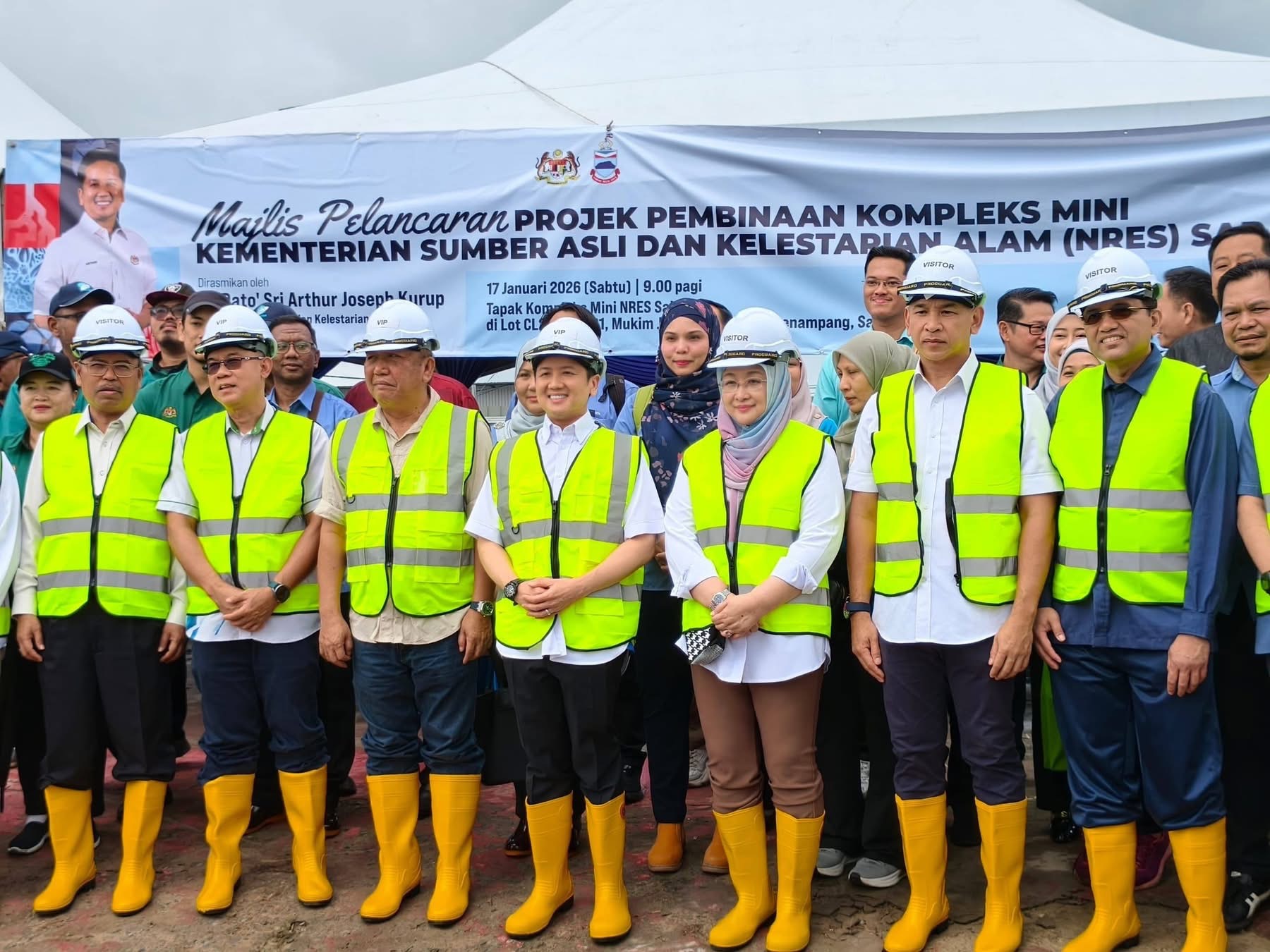
The project was approved under Rolling Plan Three of the 12th Malaysia Plan, with construction beginning on Oct 2, 2025. Arthur officiated at its groundbreaking ceremony on Jan 17, 2026.
The development follows a long-standing need for a dedicated complex, after the departments had waited almost 32 years for such a facility. Its completion is expected to provide a more stable operational base for the agencies in the state.
However, strengthening NRES operations in Sabah also requires a strong presence beyond government offices. Protecting the state’s forests and biodiversity depends on monitoring, enforcement and the involvement of communities living close to natural habitats.
Community rangers strengthen protection on the ground
One initiative supporting these efforts is the Community Ranger programme, which places local personnel in strategic forest areas to assist authorities in monitoring activities and protecting biodiversity.
For 2026, 225 Community Rangers were allocated to Sabah with a federal allocation of RM8.46 million. The initiative is part of the Biodiversity Protection and Patrol Programme (BP3), which received RM80 million under Budget 2026 to support the appointment of 2,500 rangers nationwide.
Arthur said that as of February 2026, 217 Community Rangers had been deployed at 18 strategic patrol posts in Sabah, including in Keningau, Lahad Datu, Kinabatangan, Sandakan, Tawau, Tenom and Sipitang.
Their presence is important because local knowledge of forest routes and terrain can help authorities identify suspicious activities, including encroachment, illegal logging and wildlife poaching.
Another 15 rangers are expected to be appointed for the Pagalungan and Pensiangan areas, extending patrol coverage to remote locations where access and geography can pose particular challenges.

The programme also includes the involvement of women Community Rangers through the SMART Analyst team, which manages data on forest crime hotspots. Such information can help authorities identify high-risk areas and plan patrols according to emerging needs.
Community participation is vital because residents living near forest areas often have a detailed understanding of local routes, terrain and changes in activity. Their involvement can strengthen cooperation between local communities and enforcement agencies.
The programme is not simply about increasing manpower; it also builds partnerships with communities to safeguard the country’s natural heritage.
Joint operations to curb forest and wildlife crimes
Sabah’s biodiversity protection efforts also require consistent enforcement, particularly against illegal hunting, forest encroachment and activities that threaten wildlife habitats.
The Integrated Operation Khazanah (OBK) brings together various enforcement agencies to combat offences involving forest encroachment, illegal logging, theft of forest produce and wildlife poaching.
Figures announced by Arthur in February 2026 showed that seizures under the operation from 2019 to December 2025 were valued at RM413.1 million. The operation also resulted in the detention of 904 locals and 294 foreigners.
During the same period, 2,838 animal snares were destroyed to reduce threats to wildlife, including iconic species such as orangutans, banteng and Bornean elephants.
The figures reflect the scale of enforcement challenges, as snares can injure or kill wildlife beyond their intended targets.
Tackling these activities requires cooperation between technical departments, enforcement teams and local communities. Information gathered by rangers during patrols can help identify high-risk locations, while joint operations allow agencies to combine their expertise and enforcement powers.
The Mini NRES Complex, Community Ranger deployment and OBK therefore represent complementary approaches to strengthening natural resource management in Sabah.
The new complex will provide physical facilities and a base for coordination among technical departments. Community Rangers will support monitoring on the ground, while OBK will remain an enforcement mechanism against activities that threaten forests and wildlife.
Although the RM80.9 million complex alone cannot resolve all environmental management challenges, it could provide an important foundation for improving the ministry’s long-term operational capacity in Sabah.
Its effectiveness will depend on how well the facilities are used, the availability of skilled personnel, coordination between agencies and sustained enforcement in the field.
For Sabah, with its valuable biodiversity and extensive forest areas, institutional capacity, technical expertise and on-the-ground protection must advance together.
Ultimately, investment in infrastructure and human resources must translate into more efficient management, stronger environmental protection and lasting benefits for the people and generations to come.
